

Hypertension means the pressure inside your arteries is consistently too high. Blood vessels stretch. The heart works harder than it should. Over months and years, that sustained strain causes damage to the kidneys, the heart, the brain, the eyes.
It is, in most cases, completely silent. No pain. No obvious symptoms. Which is precisely why it gets missed, or managed loosely, until something more serious happens.
The good news is that it’s also very manageable when treated properly. Not just with a prescription, but with a full assessment of what’s driving it and what damage, if any, has already occurred.

How Dr. Rashmi Bajpai treat BP patients?
Dr. Bajpai approaches hypertension the way it deserves to be approached with a proper investigation. She looks at whether there’s a secondary cause (kidney disease, thyroid dysfunction, certain medications) and assesses the impact on end organs how the heart, kidneys, and eyes are holding up under the pressure.
The management plan is built around that information. Medication is chosen based on the individual patient profile, not just the number on the cuff. Lifestyle factors salt intake, weight, stress, exercise are addressed properly, with specific advice rather than generic instruction.
She builds in regular follow-up from the start, because blood pressure control is not something you set and forget. It requires adjustment over time as the clinical picture changes.
When Should You See a Specialist?
If any of these sound familiar, it’s worth booking a consultation:
- Readings consistently above 140/90 mmHg on a home monitor
- Headaches particularly at the back of the head, often in the morning
- Dizziness or a feeling of pressure in the head
- Nosebleeds that aren’t easily explained
- Blurring or changes in vision
- Breathlessness on mild activity
- Close family history of heart attack, stroke, or kidney disease
Her Treatment Approach
Every hypertension consultation starts with a full history. How long have readings been elevated? What has been tried? Are there symptoms? Are there conditions kidney disease, diabetes, thyroid problems that could be contributing or complicating?
Investigations are targeted at understanding the cause and assessing whether any end-organ damage has occurred. From there, the treatment plan is specific to that patient’s profile.
Follow-up is scheduled regularly. At each visit blood pressure control, medication tolerance and any new developments are reviewed. The goal is sustained control, not just a number that looks right for a single appointment.
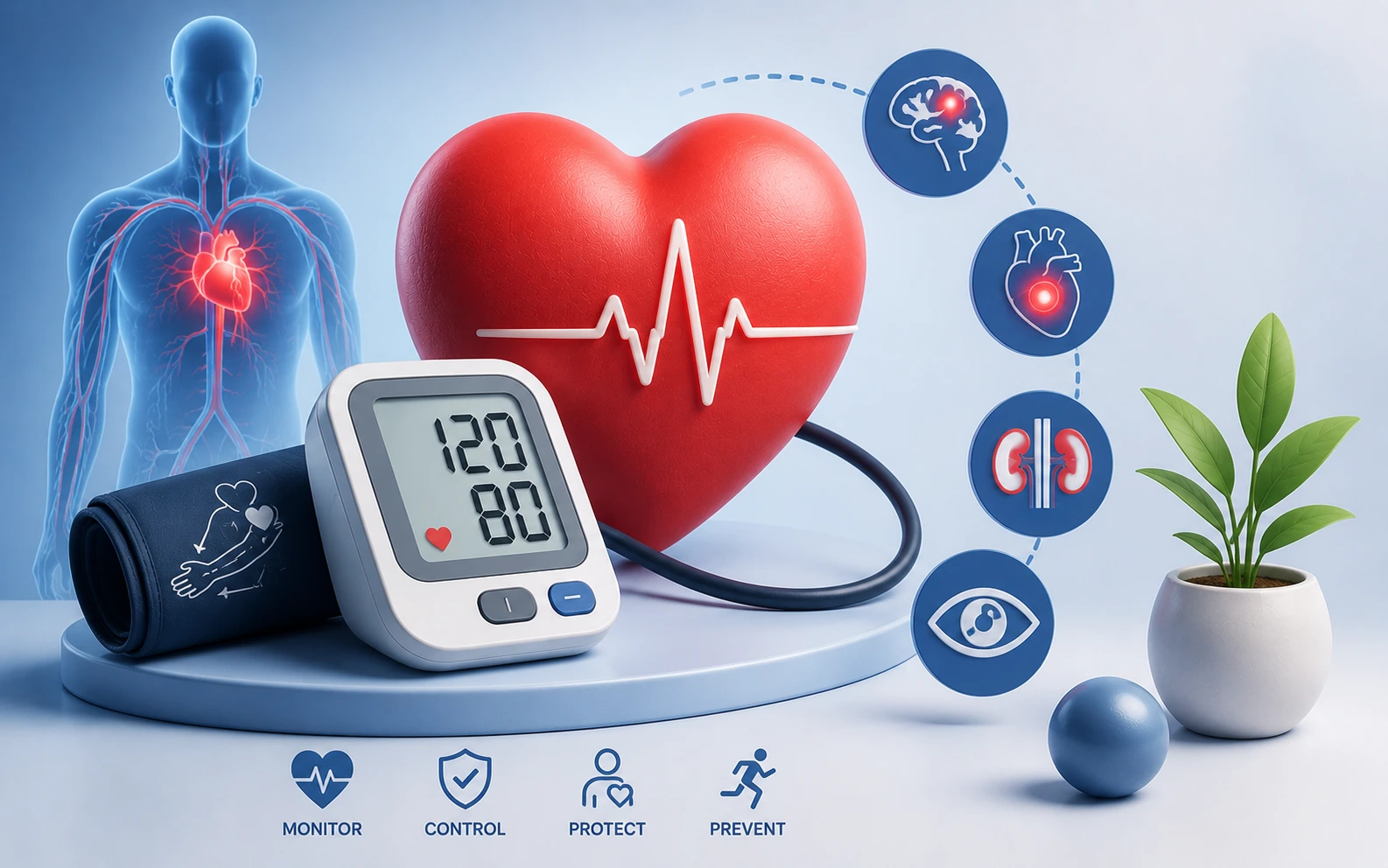
The complications of poorly managed diabetes are well documented. Kidney failure. Blindness. Foot ulcers leading to amputation. Heart disease. These aren’t rare worst-case scenarios they happen regularly to people whose diabetes was never properly controlled. The difference between good outcomes and bad ones is almost always the quality of management, started early and maintained consistently. Even in patients who have had diabetes for years, improving control now slows the progression of whatever damage has already begun. Specialist review not just annual GP checks is where that difference gets made.
FAQs
What blood pressure level needs treatment?
Generally, consistent readings above 140/90 mmHg warrant treatment but it depends on the full cardiovascular risk picture. Some patients with lower readings but multiple risk factors may benefit from starting earlier. It’s a clinical decision, not a fixed threshold.
Can I stop my medication if my pressure is normal?
If your pressure is normal, it’s likely because the medication is working. Stopping without guidance can cause it to rise again sometimes rapidly. Any changes to medication should be discussed with Dr. Bajpai first.
Does stress directly cause hypertension?
Acute stress causes temporary spikes. Chronic stress contributes to sustained elevation over time. It’s one of several factors, not the only one but it’s an important part of the management conversation.